Archives
- 2026-06
- 2026-05
- 2026-04
- 2026-03
- 2026-02
- 2026-01
- 2025-12
- 2025-11
- 2025-10
- 2025-09
- 2025-03
- 2025-02
- 2025-01
- 2024-12
- 2024-11
- 2024-10
- 2024-09
- 2024-08
- 2024-07
- 2024-06
- 2024-05
- 2024-04
- 2024-03
- 2024-02
- 2024-01
- 2023-12
- 2023-11
- 2023-10
- 2023-09
- 2023-08
- 2023-07
- 2023-06
- 2023-05
- 2023-04
- 2023-03
- 2023-02
- 2023-01
- 2022-12
- 2022-11
- 2022-10
- 2022-09
- 2022-08
- 2022-07
- 2022-06
- 2022-05
- 2022-04
- 2022-03
- 2022-02
- 2022-01
- 2021-12
- 2021-11
- 2021-10
- 2021-09
- 2021-08
- 2021-07
- 2021-06
- 2021-05
- 2021-04
- 2021-03
- 2021-02
- 2021-01
- 2020-12
- 2020-11
- 2020-10
- 2020-09
- 2020-08
- 2020-07
- 2020-06
- 2020-05
- 2020-04
- 2020-03
- 2020-02
- 2020-01
- 2019-12
- 2019-11
- 2019-10
- 2019-09
- 2019-08
- 2019-07
- 2019-06
- 2018-07
-
corticosterone Sustained release property is also associated
2024-03-22
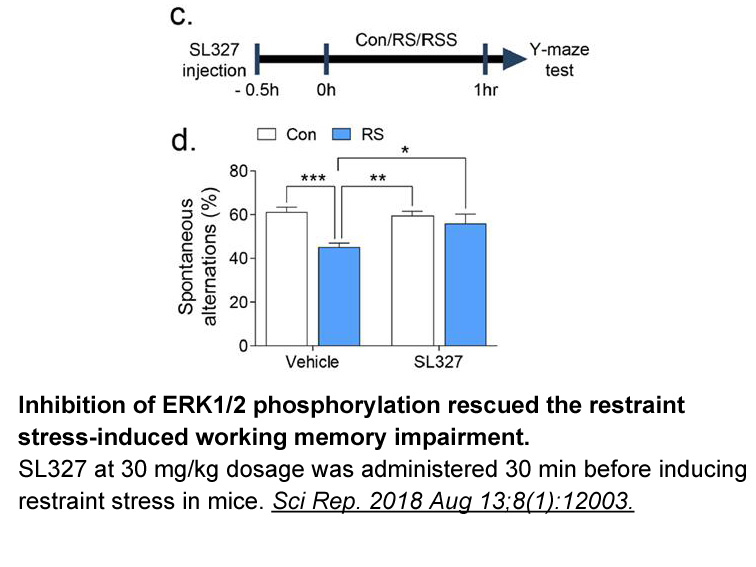
Sustained release property is also associated with side effects reduction [16] that could be confirmed by histopathological analyzes. Massive infiltrating inflammatory cells, hyperproliferation of skin layers and keratin pearls, caused by DMBA and croton oil application [32] are attenuated in Imq-lo
-
The chronic induction of skeletal muscle
2024-03-22

The chronic induction of skeletal muscle AMPK activity is an attractive therapeutic approach for DMD, as it addresses multiple cellular pathways needed for powerful phenotypic plasticity, including activation of the slow oxidative myofiber program, corrective autophagic signaling, as well as regulat
-
N terminally extended antigenic peptide precursors that surv
2024-03-22
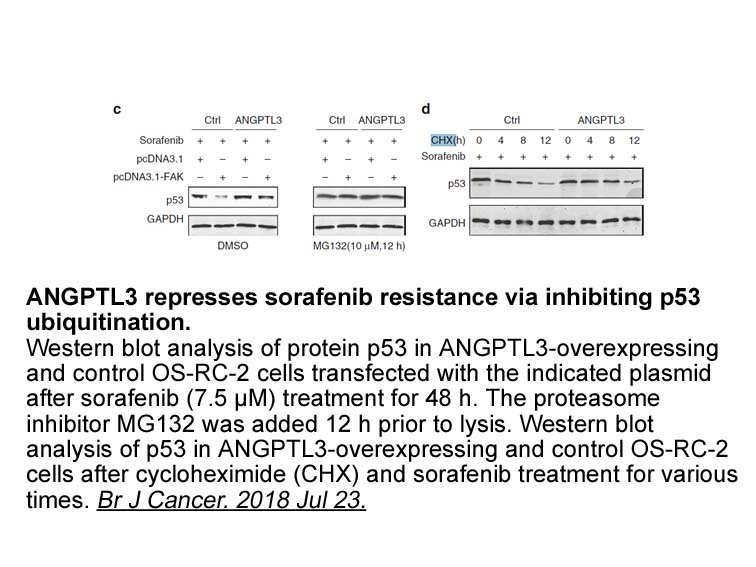
N-terminally extended antigenic peptide precursors that survive cytosolic degradation and enter the ER, need to be further processed by ERAP1 and/or ERAP2, in order to acquire the right length required for MHCI binding. ERAP1 (ERAAP in mouse) is an IFN-γ-inducible, metalloaminopeptidase that trims N
-
Imipramine hydrochloride To examine whether the interaction
2024-03-21
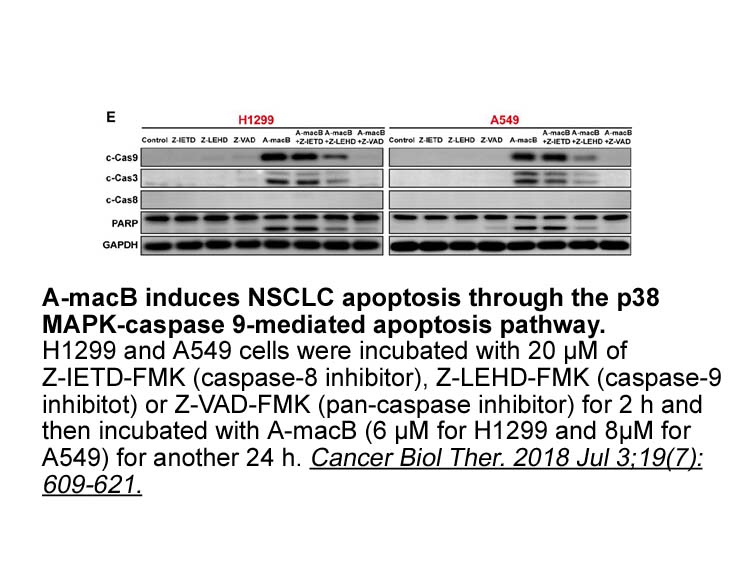
To examine whether the interaction between mGlu7 and α1-adrenergic receptors could be confirmed at a behavioural level, we performed the FST in mice. This test has value in predicting the antidepressant-like effect of drugs or environmental manipulations (Krishnan and Nestler, 2008, Krishnan and Nes
-
br Adiponectin receptors in colorectal cancer development AP
2024-03-21
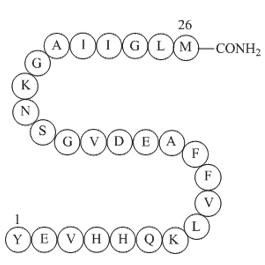
Adiponectin receptors in colorectal cancer development APN receptors expressed in CRC tissue may mediate its effects on cell expansion and cell death (Byeon et al., 2010). It was observed that the expression of AdipoR1 and 2 is higher in CRC tissue than in counterpart healthy tissues (Williams et
-
br Conflicts of interest br Newly Identified Mechanisms of
2024-03-21
Conflicts of interest Newly Identified Mechanisms of APN Resistance Hold Therapeutic Potential APN, APN Receptors, and APN Cardiovascular Protection APN Resistance in Cardiovascular Disease The Molecular Mechanisms of APN Resistance Concluding Remarks and Future Directions Finally,
-
The observation that vortioxetine blocks HT
2024-03-21
The observation that vortioxetine blocks 5-HT-induced currents in 5-HT3 receptor-expressing oocytes suggests that vortioxetine acts to functionally antagonize these receptors, and is in line with previously published data (Bang-Andersen et al., 2011). For example, Mørk et al. (2012) demonstrated tha
-
Phleomycin Protein blast analysis of the
2024-03-21
Protein blast analysis of the sequence of globin-B with those of other Phleomycin suggests that the globin-B domain in the HemAC-Lm displays only 6% identity and 34% similarity with that of cytoglobin/neuroglobin (Fig. 2). Furthermore, SWISS-MODEL protein modeling also predicts that the His311 is th
-
br Therapeutic advantages and clinical
2024-03-21
Therapeutic advantages and clinical implications of caffeine treatment in ROP The demonstration of the role of the adenosine receptor in development of ROP and protection by caffeine suggests two potential therapeutic strategies with high translational potential: a) modification of caffeine treat
-
B lymphocytes are found in blood lymph
2024-03-21
B lymphocytes are found in blood, lymph nodes, spleen and tonsil and other mucosal tissues [110]. These cells originate in the bone marrow from a common progenitor shared with T, NK, and some DC subsets [111]. Progenitor Evans Blue tetrasodium salt progress through the early stages of maturation, re
-
LY 255283 Steroidal CYP inhibitors can further be classified
2024-03-21
Steroidal CYP17 inhibitors can further be classified based on their mode of action, namely as mechanism-based inhibitors and type I and type II competitive inhibitors [129]. Recent studies investigated other biological targets than CYP17, and some new compounds have shown interesting dual activity a
-
br Conclusion In summary screening a small compound
2024-03-21
Conclusion In summary, screening a small compound library based on the 3-aminopyridin-2-one motif in a target-blind manner against a 26-kinase panel, representative of the kinome, identified hits that possess good activity and excellent ligand efficiency against MPS1, Aurora A and Aurora B. The b
-
Many ruthenium complexes were tested as potential anticancer
2024-03-21
Many ruthenium complexes were tested as potential anticancer agents and two complexes, namely NAMI-A (trans-[imH] [RuCl4(dmso-S)(im)]; im, imidazole) and KP1019 (trans-[indH][RuCl4(ind)2]; ind, indazole) have successfully entered clinical trials [27], [28]. NAMI-A is selectively active against metas
-
br Results br Discussion br Conclusions In
2024-03-21
Results Discussion Conclusions In summary, this study provides novel report of pericardial adipose aromatase expression – in both human and rodent. We show that aromatase expression is remarkably upregulated with aging (Fig. 1C), and that total aromatase AS601245 conversion capacity is sig
-
TUNEL assay Apoptotic DNA fragmentation in cells was measure
2024-03-21

TUNEL assay. Apoptotic DNA fragmentation in GW9662 mg was measured using a commercially available TUNEL assay kit (Thermo Fisher). Frozen cells were fixed with 10% paraformaldehyde/PBS. Apoptosis was determined by staining the 3′-OH ends of fragmented DNA with biotin-dNTP using DNA I klenow fragment
15704 records 196/1047 page Previous Next First page 上5页 196197198199200 下5页 Last page